



 Overviews
 Trip Overview
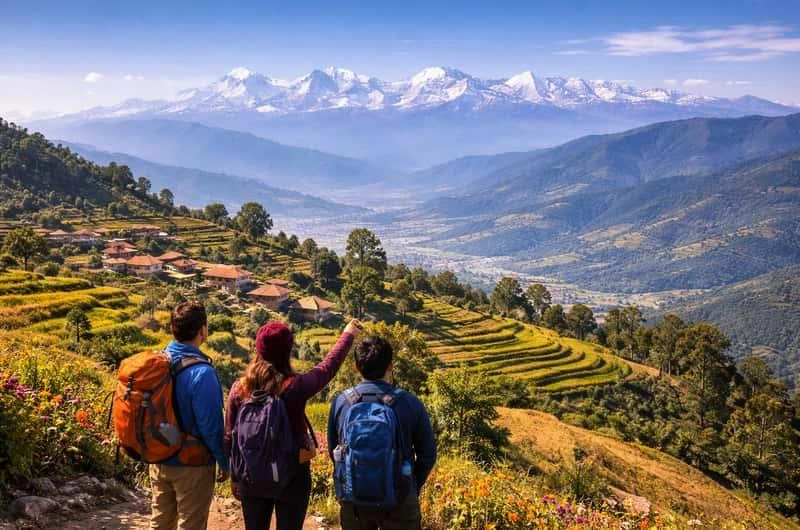
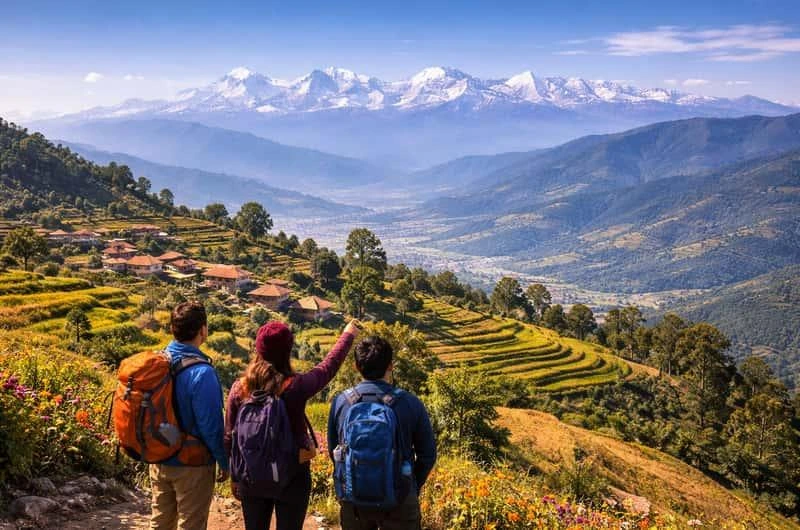
The Nagarkot and Dhulikhel Ridge Trek is a rewarding five-day Nepal adventure combining scenic countryside walking, panoramic Himalayan views, traditional villages, ancient cultural heritage and fascinating sightseeing around the Kathmandu Valley. Designed for travellers who wish to experience Nepal's natural beauty and cultural diversity without committing to a lengthy Himalayan expedition, this short trekking holiday offers an excellent introduction to the hills and countryside surrounding Kathmandu. The journey connects the historic settlement of Changu Narayan with the beautiful hill station of Nagarkot and the traditional Newari town of Dhulikhel, creating an enjoyable combination of village trails, ridge walks, rural landscapes, mountain viewpoints and cultural discoveries.
Unlike longer trekking routes in the Everest or Annapurna regions, the Nagarkot and Dhulikhel Ridge Trek does not require extensive travel or high-altitude trekking experience. Its accessible location makes it particularly attractive for visitors with limited time in Nepal, couples, families with reasonable walking fitness and travellers looking for an outdoor adventure close to the capital. The itinerary combines cultural exploration around Changu Narayan, countryside walking towards Nagarkot, a scenic ridge trekking experience from Nagarkot to Dhulikhel and guided sightseeing at some of the Kathmandu Valley's most important religious and historical attractions.
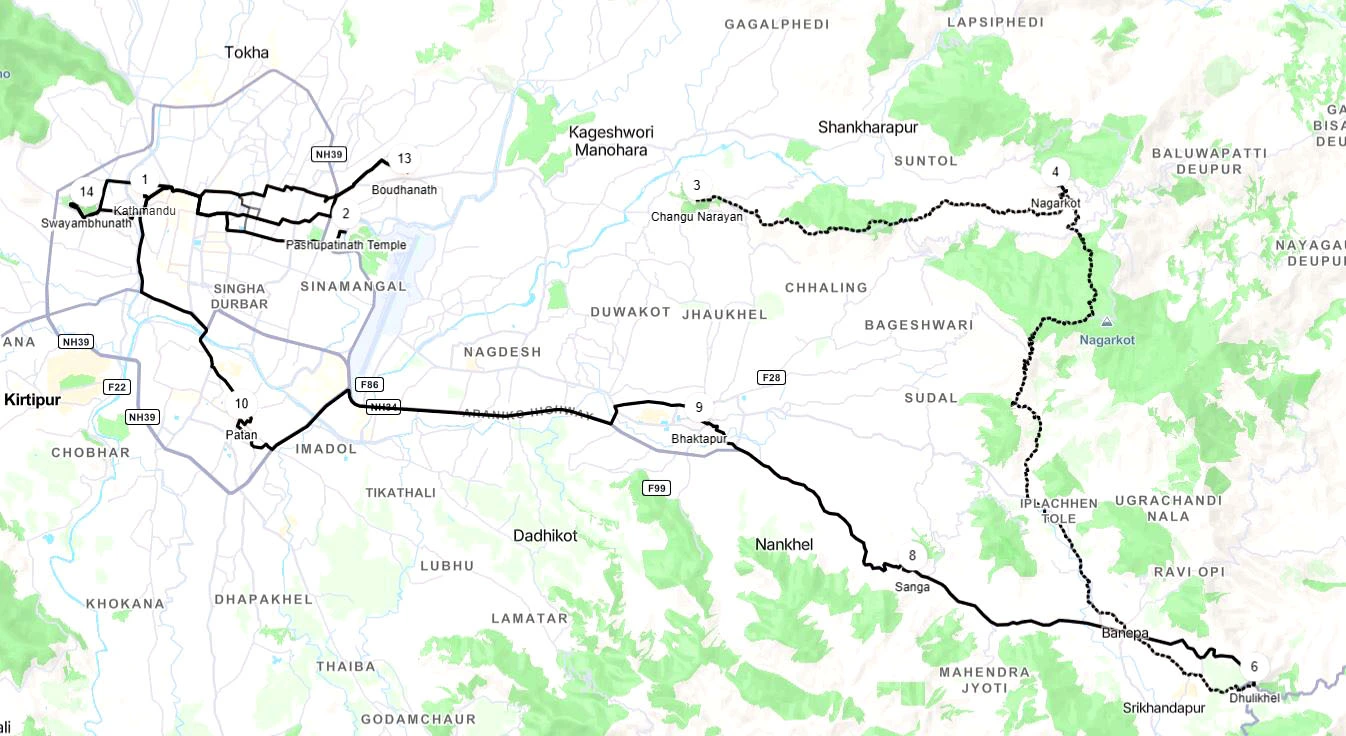
The trek begins with a visit to Changu Narayan Village, one of Nepal's oldest and most historically significant Hindu temples. After exploring the ancient temple complex and its traditional surroundings, you will begin walking through the eastern countryside of the Kathmandu Valley towards Nagarkot. The following day, enjoy the beautiful Himalayan sunrise before setting out on the main ridge trekking section towards Dhulikhel. Along the way, discover quiet village paths, terraced agricultural fields, open hillsides, traditional settlements and viewpoints overlooking the surrounding valleys and Himalayan foothills.
The combination of accessible walking trails, changing countryside scenery and cultural encounters makes this journey a distinctive short trekking experience. Rather than concentrating solely on reaching a particular destination, the Nagarkot and Dhulikhel Ridge Trek allows you to appreciate the landscapes, communities and cultural heritage encountered throughout the journey.
Changu Narayan: Ancient Heritage and Countryside Walking
Your trekking adventure begins with a drive from Kathmandu to Changu Narayan Temple, located on a hilltop overlooking the eastern side of the Kathmandu Valley. Recognised as a UNESCO World Heritage Site, Changu Narayan is dedicated to Lord Vishnu and is widely regarded as one of the oldest surviving Hindu temple complexes in Nepal. Its historical importance is reflected in its ancient stone inscriptions, traditional Newari architecture, beautifully carved wooden elements, metalwork and impressive stone sculptures depicting different forms of Hindu deities.
Spend approximately one hour exploring the temple complex and its surroundings before beginning your countryside walking experience. The temple area is particularly interesting for visitors who appreciate Nepalese history, religious traditions, architecture and traditional Newari craftsmanship. The surrounding settlement also provides an opportunity to observe traditional houses, narrow lanes, local courtyards and the everyday lifestyle of the local community.
From Changu Narayan village, the walking journey heads towards the Nagarkot hills through the eastern countryside of the Kathmandu Valley. This section follows a combination of traditional village paths, gravel roads, local paved roads and natural hillside footpaths. As you gradually move away from the historic temple settlement, the landscape opens towards terraced farmland, agricultural fields, small villages and green hillsides. You may encounter local farmers working in their fields, traditional homes and peaceful rural settlements that reflect the agricultural lifestyle of the Kathmandu Valley.
Rather than following one continuous, clearly defined natural trekking trail, this section uses a combination of available walking routes and local connecting roads. The exact walking distance and route can be adjusted according to trail accessibility, seasonal conditions and your preferred walking duration. This flexibility allows your guide to select the most attractive available walking sections while maintaining a comfortable pace.
After completing the selected walking section, continue by vehicle to your accommodation in Nagarkot. This arrangement allows you to enjoy the countryside on foot without making the first day unnecessarily demanding.
Nagarkot: Himalayan Sunrise and Mountain Scenery
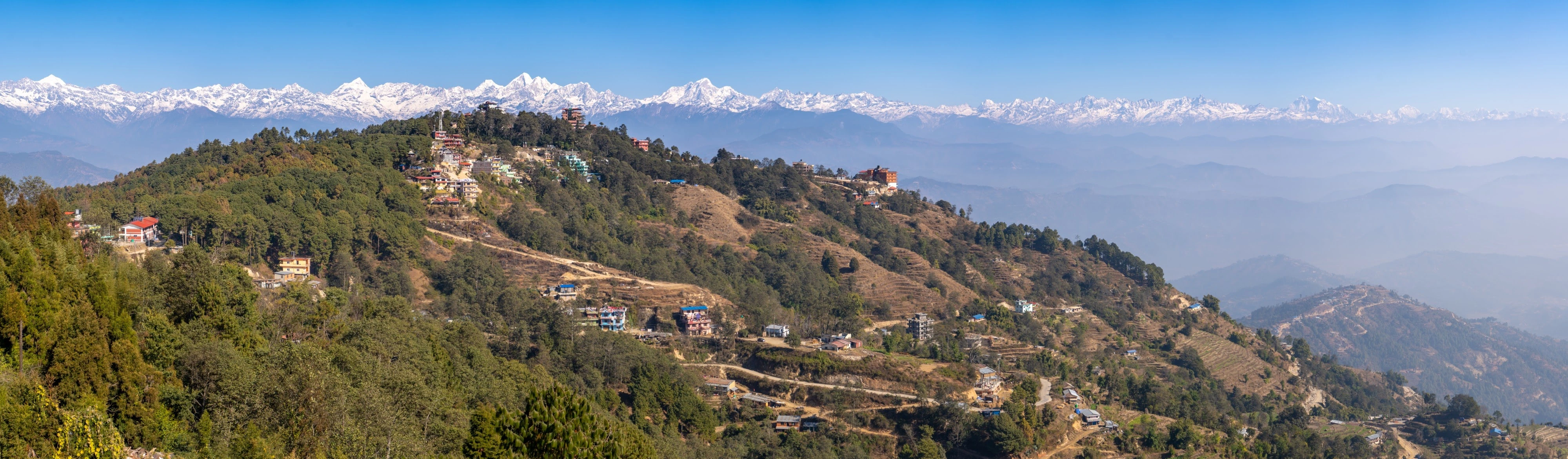
Situated at approximately 2,175 metres above sea level, Nagarkot is one of the most popular Himalayan viewpoints near Kathmandu. Its elevated position along the eastern hills of the Kathmandu Valley provides beautiful views across the surrounding countryside and, on clear days, an impressive panorama of the Himalayan mountain range.
The early morning sunrise at Nagarkot Hill (2,175 m) is one of the most memorable experiences of the journey. As the first rays of sunlight appear over the eastern horizon, the snow-covered Himalayan peaks gradually become illuminated, creating a spectacular contrast against the surrounding hills and valleys. Depending on weather and visibility, you may enjoy views of several Himalayan ranges and distant mountain peaks.
Your overnight stay in Nagarkot provides time to relax and appreciate the peaceful mountain environment before continuing the main ridge trekking section. Enjoy the fresh hillside atmosphere, scenic surroundings and, weather permitting, beautiful sunset and sunrise views. Nagarkot is also an excellent place for photography, particularly during clear mornings when the mountain scenery is at its best.
Although mountain visibility depends on weather conditions, the peaceful surroundings and elevated landscape make Nagarkot an attractive destination throughout the year.
Nagarkot to Dhulikhel: The Scenic Ridge Trail Trek
The highlight of the Dhulikhel Ridge Trek is the walking journey from Nagarkot to Dhulikhel, following the scenic eastern ridges of the Kathmandu Valley. After enjoying the morning sunrise and breakfast, set out with your trekking guide along a combination of established ridge paths, natural footpaths, forest tracks, traditional village routes and selected local connecting roads.
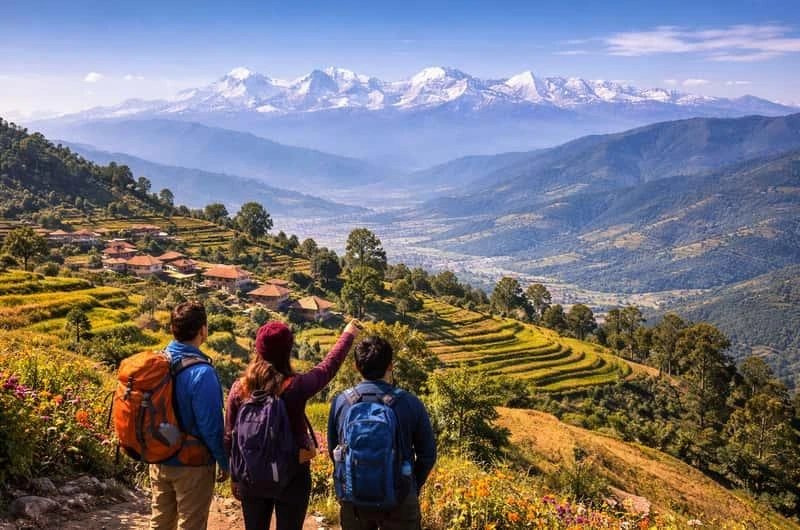
The trail offers a changing variety of countryside landscapes, including wooded hillsides, terraced farmland, open ridgelines, agricultural settlements and traditional villages. As you walk through the eastern hills, you can enjoy panoramic views of the surrounding valleys and Himalayan foothills whenever weather conditions permit. The route also offers opportunities to encounter local communities, observe agricultural activities and appreciate the traditional rural lifestyle of Nepal.
Unlike a fully developed trekking route with a continuous marked footpath, the Nagarkot and Dhulikhel Ridge Trail uses different types of local walking surfaces. Some sections follow natural footpaths through bushes, agricultural areas and open hillsides, while others use gravel roads and local paved roads connecting settlements. This combination creates a varied village-to-village walking experience rather than a remote wilderness trek.
The Nagarkot to Dhulikhel walking section generally consists of approximately:
40% gravel roads: Rural connecting roads and gravel tracks passing through villages, agricultural areas and open countryside.
20% paved local roads: Short sections of village roads and local connecting routes.
40% natural trails and footpaths: Narrow walking paths, open hillside tracks and natural routes through bushes and agricultural areas where vehicle roads are unavailable.
These percentages are indicative and may vary according to the selected route, local accessibility and seasonal trail conditions. During the rainy season, some natural footpaths may become muddy, overgrown or less clearly defined. In other seasons, these sections may offer easier walking conditions and better access to the surrounding countryside. Your local guide will select the most suitable available route according to current conditions, walking ability and accessibility.
Allow approximately 5–6 hours of walking for this trekking day. The route includes gentle ascents and descents along the ridgelines, with some uneven and occasionally narrow natural paths. The overall difficulty is moderate and suitable for average walkers with reasonable fitness who are comfortable walking for several hours on mixed terrain.
Your guide will manage the walking pace, recommend suitable rest stops and adjust the route where necessary. Lunch can be arranged at a suitable local restaurant along the way wherever facilities are available. Depending on the trail location and restaurant accessibility, your guide will advise whether to stop for a restaurant meal or continue with a packed lunch.
Upon reaching Dhulikhel, transfer to your hotel if required and enjoy a relaxing evening after completing the main trekking section.
Dhulikhel: Traditional Newari Culture and Himalayan Views
The journey concludes in Dhulikhel, a historic Newari town known for its traditional architecture, cultural heritage, local markets and beautiful Himalayan panoramas. Located southeast of Kathmandu, Dhulikhel has long served as an important commercial and trading centre connecting Kathmandu with communities and districts across eastern Nepal.
The old town is particularly interesting for its traditional Newari houses, narrow streets, temples, historic courtyards and local market atmosphere. Walking through the historic settlement provides an opportunity to discover the architecture and cultural traditions that have shaped this important hill town over generations.
Dhulikhel is also appreciated for its elevated viewpoints, which provide impressive views of the Himalayan range on clear days. After the countryside trekking experience, you can enjoy a more relaxed exploration of the town, observe local trading activities and experience the atmosphere of a traditional Nepalese market centre.
Today, Dhulikhel remains an important gateway and commercial hub along the eastern highway connecting Kathmandu with the eastern districts of Nepal. Its combination of historical importance, local commerce, cultural traditions and mountain scenery makes it a rewarding destination at the end of the ridge trekking experience.
Kathmandu Valley Cultural and Heritage Sightseeing
Beyond the countryside trekking experience, this five-day Nepal journey includes visits to some of Nepal's most important religious, cultural and historical attractions. These sightseeing experiences introduce you to the Kathmandu Valley's cultural heritage and the religious traditions of Hinduism and Buddhism.
Pashupatinath Temple and Evening Aarti Ceremony
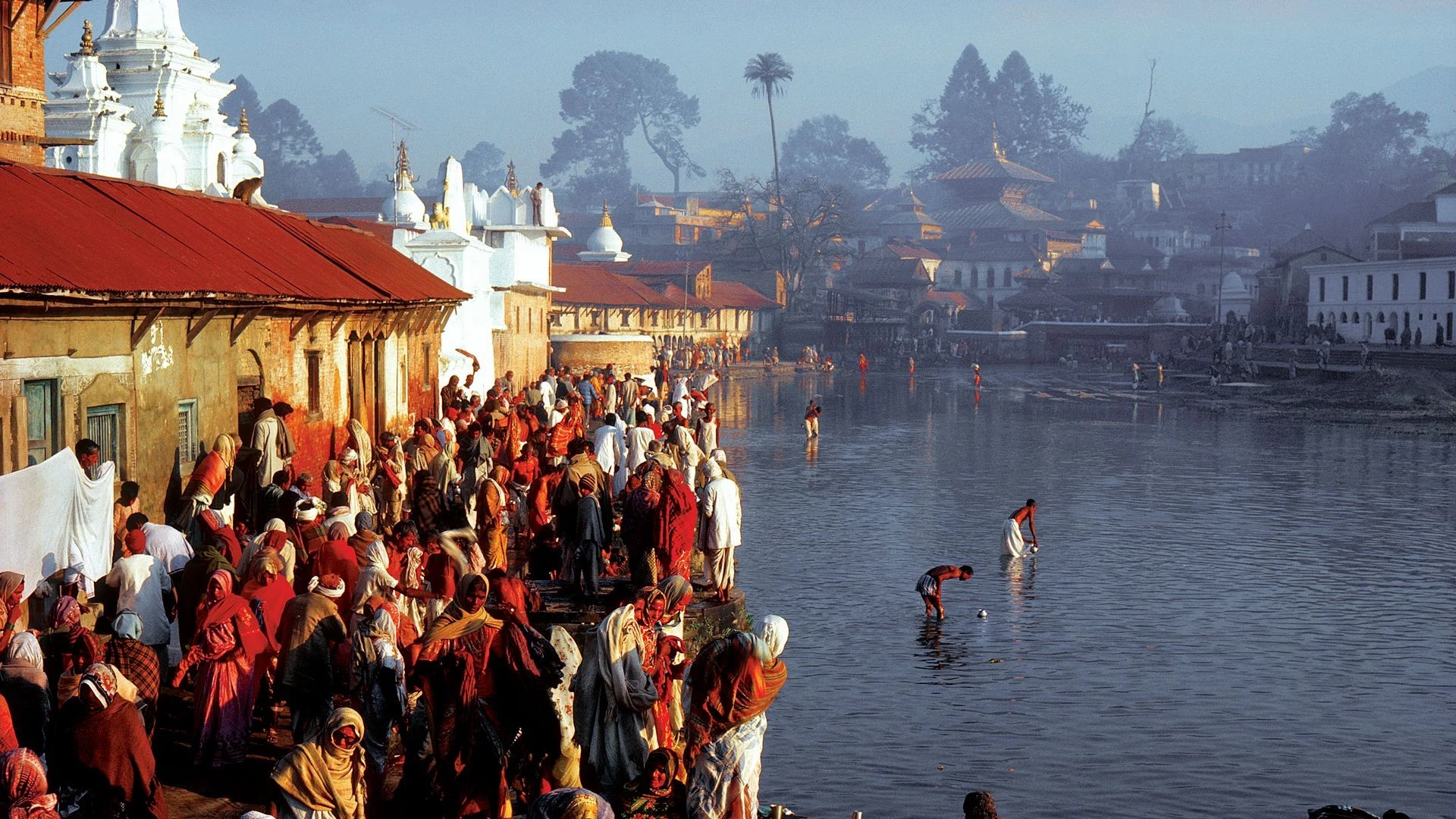
Your cultural exploration includes a visit to Pashupatinath Temple, one of the most sacred Hindu pilgrimage sites in Nepal. Located beside the Bagmati River, the temple is dedicated to Lord Shiva and attracts pilgrims and visitors from Nepal and neighbouring countries.
The temple complex is renowned for its traditional pagoda architecture, religious shrines, sacred riverbank and centuries-old spiritual traditions. One of the most memorable experiences is the evening Bagmati Aarti ceremony, during which Hindu priests perform devotional prayers accompanied by traditional music, rhythmic movements and illuminated oil lamps.
The ceremony generally takes place around 6:00 PM, although the exact timing can vary according to the season. The combination of devotional singing, sacred fire rituals and the spiritual atmosphere beside the river provides a meaningful introduction to Nepalese religious culture.
Sanga and Kailashnath Mahadev Statue
On the return journey from Dhulikhel towards Kathmandu, stop at Sanga to visit the impressive Kailashnath Mahadev Statue. Standing approximately 143 feet (43.5 metres) high, this monumental statue of Lord Shiva is one of the most recognisable religious landmarks in the Kathmandu Valley.
Situated on a hillside, the statue offers an interesting sightseeing opportunity and a chance to appreciate the religious significance of Lord Shiva in Nepalese Hindu traditions. The surrounding area also provides attractive views of the hills and countryside.
Bhaktapur Durbar Square
Continue to Bhaktapur Durbar Square, one of the Kathmandu Valley's three UNESCO-listed Durbar Squares and an outstanding example of traditional Newari architecture and urban heritage.
Bhaktapur is particularly famous for its medieval royal courtyards, pagoda-style temples, traditional brick houses, intricately carved wooden windows and remarkable craftsmanship. Explore the historic palace area, traditional squares and surrounding streets to discover the cultural character of this ancient Newari city.
Important attractions include the 55-Window Palace, Golden Gate, Vatsala Temple and Nyatapola Temple. You can also experience the local atmosphere around pottery squares, traditional shops and historic neighbourhoods. Bhaktapur is an excellent place to appreciate Nepal's artistic heritage and traditional Newari lifestyle.
Patan Durbar Square
Another important cultural destination is Patan Durbar Square, located in Lalitpur, south of central Kathmandu. This UNESCO World Heritage Site is renowned for its impressive collection of traditional temples, royal palaces, courtyards, Buddhist monuments and exceptional metal and wood craftsmanship.
Explore the historic palace complex, Krishna Mandir, the Golden Temple area and traditional streets surrounding the square. Patan has a particularly strong artistic heritage, with generations of Newari artisans producing traditional metal sculptures, religious objects, wood carvings and other handicrafts.
Together, Bhaktapur and Patan provide a fascinating insight into the historical development, religious traditions and architectural achievements of the Kathmandu Valley.
Boudhanath and Swayambhunath: Buddhist Heritage of Kathmandu
The cultural sightseeing experience also includes visits to two of Nepal's most important Buddhist pilgrimage sites: Boudhanath Stupa and Swayambhunath Stupa.
Boudhanath is one of the largest Buddhist stupas in the world and an important centre of Tibetan Buddhist culture in Kathmandu. The massive white dome, golden tower, colourful prayer flags and traditional monasteries create a distinctive spiritual atmosphere. Visitors can walk around the stupa following the traditional clockwise pilgrimage route, observe devotees spinning prayer wheels and explore the surrounding Tibetan Buddhist monasteries and shops.
Swayambhunath, popularly known as the Monkey Temple, is another important Buddhist heritage site situated on a hill overlooking Kathmandu. Its distinctive white dome, golden spire, painted Buddha eyes and surrounding shrines make it one of the valley's most recognisable landmarks. From the hilltop, visitors can also enjoy panoramic views across Kathmandu Valley, weather permitting.
These two destinations provide a deeper understanding of Nepal's Buddhist traditions and the cultural connections between Nepal and the wider Himalayan region.
Optional Everest Mountain Flight
For travellers wishing to experience the Himalayas from a different perspective, an optional early morning Everest mountain flight can be arranged, subject to weather conditions and airline operation.
The scenic flight offers an opportunity to view some of the world's highest Himalayan peaks from the air, including Mount Everest, when visibility permits. It is an excellent additional experience for visitors who have limited time but wish to enjoy an unforgettable aerial perspective of the Himalayan mountain range.
The flight is optional and requires an additional payment. Its operation depends on weather conditions, flight schedules and airline availability.
How Is the Dhulikhel Ridge Trek Trail?
The Nagarkot and Dhulikhel Ridge Trek is a scenic village-to-village walking experience along the eastern hills and ridgelines of the Kathmandu Valley. The journey begins at Changu Narayan, home to one of Nepal's oldest and most historically significant Hindu temples. Dedicated to Lord Vishnu, Changu Narayan Temple is a UNESCO World Heritage Site renowned for its ancient stone inscriptions, traditional Newari architecture, intricate wood carvings and centuries-old religious heritage.
Before beginning the walk, spend approximately one hour exploring the temple complex and its surroundings. This provides a meaningful introduction to Nepal's history, architecture and religious traditions before continuing into the countryside.
From Changu Narayan, the walking journey heads towards Nagarkot through the eastern hills of the Kathmandu Valley. The route combines traditional village paths, gravel roads, local paved roads and natural hillside footpaths, passing terraced farmland, small settlements and open ridgelines. The landscape is characterised by rural communities, agricultural fields and panoramic viewpoints rather than dense forest wilderness.
After reaching Nagarkot, enjoy the peaceful mountain surroundings and, weather permitting, beautiful Himalayan views. The following day's walk continues from Nagarkot towards Dhulikhel along the scenic Dhulikhel Ridge Trail.
The Nagarkot to Dhulikhel section generally consists of approximately 40% gravel roads, 20% paved local roads and 40% natural walking trails and footpaths. The natural sections follow narrow village paths, open hillside tracks and small walking trails through bushes and agricultural areas where there are no vehicle roads.
These proportions are indicative, as the availability and condition of natural walking paths vary according to the season and month of travel. Some sections may become muddy, overgrown or less clearly defined during the rainy season, while other periods may offer easier access to natural footpaths. Your local guide will select the most suitable available route according to current conditions, walking ability and accessibility.
Allow approximately 5–6 hours for the Nagarkot to Dhulikhel walking section, making it a moderately challenging day suitable for average walkers with reasonable fitness. The walking experience includes a mixture of gradual uphill and downhill sections, village paths, gravel tracks and natural trails.
The journey concludes in Dhulikhel, a historic Newari town that has long served as an important commercial and trading centre for communities across eastern Nepal. Its traditional market atmosphere, local shops, historic streets and cultural heritage make it an interesting destination to explore after the countryside walk.
The combination of ancient temple heritage, traditional village walking, open ridge landscapes and a historic market-town finish makes this a distinctive short trekking experience near Kathmandu.
Why Choose the Nagarkot and Dhulikhel Ridge Trek?
The Nagarkot and Dhulikhel Ridge Trek – 5 Days offers an excellent balance of nature, culture, heritage and accessible trekking. It is ideal for travellers who want to experience Nepal's countryside without travelling to remote mountain regions or undertaking demanding high-altitude hikes.
The journey offers several distinctive experiences:
Explore Changu Narayan, one of Nepal's oldest and most historically significant Hindu temples.
Walk through traditional villages and agricultural landscapes in the eastern Kathmandu Valley.
Enjoy Himalayan sunrise views from the beautiful hill station of Nagarkot.
Experience the scenic ridge trail from Nagarkot to Dhulikhel.
Discover different walking surfaces, including gravel roads, local paved roads and natural footpaths.
Experience the traditional Newari architecture and local market atmosphere of Dhulikhel.
Visit the sacred Pashupatinath Temple and witness the evening Bagmati Aarti ceremony.
Explore the UNESCO World Heritage Sites of Bhaktapur and Patan Durbar Squares.
Discover the Buddhist heritage of Boudhanath and Swayambhunath.
Enjoy an optional Everest mountain flight for an unforgettable Himalayan aerial experience.
Organised by Jagadamba Holidays, this journey includes local trekking guidance, planned transportation, accommodation and cultural sightseeing, with flexibility to adjust the walking sections according to trail conditions and individual walking ability.
Whether you are visiting Nepal for the first time, travelling as a couple or family, or adding a short countryside adventure to a longer Himalayan holiday, the Nagarkot and Dhulikhel Ridge (Dhulikhel Ridge) Trek offers an enjoyable opportunity to discover Nepal's natural scenery, traditional communities and remarkable cultural heritage in just five days.
 Travel Itinerary
 Cost Includes
 Cost Excludes
 Fixed Departure
 Route Map
 Frequently Asked Questions
 Reviews And Rating