MUNDHUM TRAIL TREK NEPAL
US$2,700.00
/pp
-
14 Days
-
Makalu
-
Spring/Autumn
-
Trekking
-
4,153 Meters
-
Moderate
-
Car / Plane
-
02-16 People
-
JH#276
 Overviews
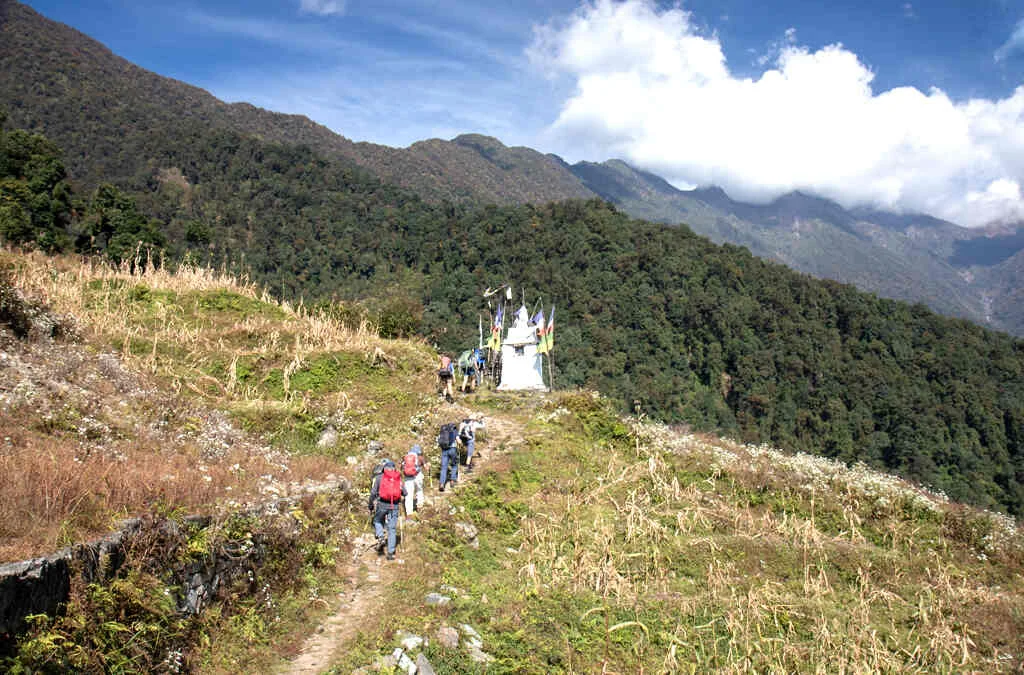
The Mundhum Trail Trek Nepal is a unique cultural and scenic trekking journey through the remote eastern hills of Nepal, where ancient Kirat culture, sacred landscapes, traditional villages, rhododendron forests, and Himalayan scenery come together. This emerging trekking route stretches across Bhojpur, Khotang, Solukhumbu, and Sankhuwasabha, following an approximately 80 km ridge trail through the ancestral homeland of the Kirat people. The journey offers a different perspective on Nepal trekking, combining mountain adventure with the living traditions, spirituality, and community life of eastern Nepal. The Mundhum Trail Trek generally begins at Chakhewa Bhanjyang (approximately 2,300 m) and follows a series of scenic ridges through Dhotre, Maiyung (Hans Pokhari), Hyakule, Rawa Dhap, Nikas, and Salpa Bhanjyang. As the trail gradually gains elevation, the landscape changes from forested hills and traditional settlements to open ridges, alpine meadows, and high mountain terrain. The route's cultural importance is closely connected with Mundhum, the oral tradition of the Kirat people that preserves ancestral stories, beliefs, rituals, cultural knowledge, and connections with the natural and spiritual world. Chakhewa Bhanjyang to Maiyung: Beginning the Mundhum TrailThe Mundhum Trail Trek Nepal begins around Chakhewa Bhanjyang, a scenic mountain settlement at approximately 2,300 m. From here, the trail follows quiet ridges through traditional eastern Nepalese landscapes, passing forests, cultivated hillsides, small settlements, and open viewpoints. The peaceful environment provides an immediate introduction to the distinctive character of the Mundhum Trail, where the landscape and local culture remain closely connected. The route continues toward Dhotre and Maiyung, also associated with Hans Pokhari, passing through forests and ridge landscapes that change with elevation and season. The area is particularly attractive during the rhododendron flowering season, when sections of the trail become surrounded by colorful woodland. Traditional villages along the route provide opportunities to observe local lifestyles and experience the hospitality of communities living in this less-developed trekking region. Maiyung to Rawa Dhap: Ridge Walking and Kirat CultureFrom Maiyung, the Mundhum Trail Trek continues along scenic mountain ridges toward Hyakule and Rawa Dhap. Rather than following a single deep valley, much of the route maintains elevated ridge walking, providing changing views of the surrounding hills and distant Himalayan ranges. The gradual rhythm of climbing and descending makes the journey particularly enjoyable for trekkers who appreciate open landscapes and quiet mountain trails. The cultural experience is an important part of this section. The Kirat communities have maintained distinctive traditions, beliefs, rituals, and forms of cultural expression across generations. The Mundhum tradition plays a central role in preserving ancestral knowledge and explaining the spiritual relationship between people, nature, and the landscape. Depending on the season and local events, trekkers may encounter traditional performances, rituals, and celebrations associated with the Kirat cultural calendar, including Sakela Ubhauli and Udhauli. Salpa Bhanjyang and Salpa Pokhari: Sacred Mountain LandscapesThe trail continues toward Salpa Bhanjyang, where the landscape becomes increasingly alpine and the surrounding mountain environment feels more remote. The ridge route eventually reaches Salpa Pokhari (3,672 m), one of the most important natural and spiritual landmarks of the Mundhum Trail Trek Nepal. This sacred alpine lake is valued by local communities and also attracts pilgrims and travelers interested in the cultural and spiritual significance of the eastern Himalayan landscape. The area around Salpa Pokhari provides a striking combination of high-altitude scenery and cultural heritage. The open mountain surroundings, alpine vegetation, and peaceful atmosphere create an ideal setting for reflection and photography. The Mundhum Trail has also been promoted as a Tapobhumi, a spiritual landscape associated with meditation, introspection, and a deeper connection with nature. Silichung Peak: Highest Point of the Mundhum TrailThe journey continues toward Silichung Peak (4,153 m), the highest point of the Mundhum Trail Trek. The ascent provides a rewarding high-altitude experience as the trail moves across increasingly open mountain terrain. From the summit and surrounding high ridges, clear-weather conditions can reveal expansive views toward some of the major peaks of eastern Nepal, including Mount Everest, Lhotse, Makalu, and Kanchenjunga. Reaching Silichung Peak adds an adventurous dimension to what is otherwise strongly characterized by cultural and spiritual experiences. The combination of high mountain views, sacred landscapes, and the remote setting makes the summit one of the defining highlights of the Mundhum Trek Nepal. Kirat Culture, Mundhum Tradition and Spiritual HeritageThe cultural identity of the Mundhum Trail Trek Nepal is one of its greatest attractions. The route passes through areas traditionally inhabited by Kirat communities, where indigenous customs, ancestral knowledge, traditional village life, and spiritual practices remain important parts of local identity. Mundhum is an oral cultural tradition containing stories, rituals, beliefs, and knowledge passed between generations. Trekkers can experience this heritage through local communities, sacred places, traditional landscapes, and cultural events. Honey-harvesting traditions, traditional performances, Sakela celebrations, and other local practices may form part of the cultural experience depending on the timing of the trek. This cultural immersion distinguishes the Mundhum Trail from trekking routes focused primarily on mountain scenery. The journey offers an opportunity to understand how local communities maintain a strong relationship with their ancestral landscapes and natural environment. Forests, Wildlife and Himalayan LandscapesThe Mundhum Trail Trek passes through diverse ecological zones, creating considerable variation in scenery throughout the journey. Lower and middle sections include rhododendron forests, temperate woodland, grasslands, and cultivated hillsides, while higher sections open into alpine meadows and rugged mountain ridges. The region's natural environment supports diverse Himalayan flora and fauna. Depending on the season and location, trekkers may encounter a variety of bird species and other wildlife, with the wider eastern Himalayan landscape also providing habitat for red pandas. The combination of biodiversity, quiet forests, open ridges, and distant mountain views makes the trek appealing to nature lovers, photographers, and travelers seeking a peaceful Himalayan experience. Community-Based Tourism on the Mundhum TrailThe Mundhum Trail Trek Nepal provides an opportunity to support community-based tourism in eastern Nepal. Accommodation and services are generally more locally oriented than on the country's busiest trekking routes, with homestays, local lodges, community facilities, local guides, and family-run businesses contributing to the trekking experience. The trail received additional national attention during the 2025 Mundhum Trail Visit Year initiative, which promoted the region as a cultural and nature-based tourism destination and encouraged improvements to facilities such as homestays, drinking-water infrastructure, rest shelters, and public toilets. Various cultural and outdoor events were also promoted during the campaign. These initiatives form part of the trail's recent tourism development history rather than a current 2026 campaign. Some sections of the Mundhum Trail are also associated with routes reportedly used during early Everest expeditions, adding a historical dimension to the journey. Combined with its indigenous heritage, sacred landscapes, and natural diversity, this gives the trail a distinctive character within Nepal's growing network of cultural trekking routes. The Mundhum Trail Trek is generally considered a moderate trek, although the repeated ridge ascents and descents and the altitude around Salpa Pokhari and Silichung Peak require proper preparation. The route can be completed in different timeframes depending on the itinerary, walking pace, acclimatization requirements, weather, and cultural exploration. A typical journey may take around 10 days for Nepali trekkers, while international travelers may prefer approximately 12–13 days for a more gradual experience. With its combination of Kirat culture, Mundhum heritage, sacred Salpa Pokhari, Silichung Peak, traditional villages, rhododendron forests, alpine landscapes, and eastern Himalayan views, the Mundhum Trail Trek Nepal offers an immersive journey through one of the country's lesser-known trekking regions. It is particularly suited to travelers who want to explore beyond Nepal's crowded trekking corridors and experience a journey where culture, spirituality, nature, and mountain adventure are closely connected.
Itinerary (Plan)
Arrive in Kathmandu, Nepal’s vibrant capital, where you will be warmly welcomed by a representative from Jagadamba Holidays with traditional marigold garlands. You will then be transferred to your hotel by private vehicle. After check-in, take some time to rest and settle in following your journey. If you feel energetic, you can explore the nearby streets and local markets, sample traditional Nepali cuisine, or simply relax at the hotel. This arrival day provides a comfortable introduction to Nepal before beginning your journey into eastern Nepal and the Mundhum Trail. Optional Evening Activity: If you wish, you can spend the evening experiencing the Pashupatinath Aarti, a traditional religious ceremony held at Pashupatinath Temple along the Bagmati River. The Aarti generally takes place in the evening and offers an opportunity to observe traditional music, devotional rituals, and the spiritual atmosphere of one of Nepal’s most important Hindu temples. The exact timing may vary depending on the day and season, so it is advisable to confirm the schedule locally. This activity is optional and not included in the standard itinerary.
After breakfast, begin the Mundhum Trail Trek Nepal journey with a private 4WD jeep drive from Kathmandu to Diktel Bazar (1,650 m) via Banepa, Khurkot, Ghurmi, and Halesi. Covering approximately 252 km, the drive takes around 8–9 hours, depending on road and traffic conditions. The route gradually leaves the Kathmandu Valley and follows river valleys, terraced hillsides, forests, traditional villages, and rural landscapes towards the eastern hills of Nepal. The journey continues through the mid-hill region towards Halesi, passing cultivated slopes, local settlements, and changing mountain views before reaching Diktel. Lunch will be arranged at a suitable restaurant along the way, with additional stops for refreshments and rest during the drive. The changing landscape provides an introduction to the rural environment and communities of eastern Nepal before the trek continues towards the Mundhum Trail area. Upon arrival in Diktel Bazar, check in at a local lodge or homestay, depending on availability, and settle into your accommodation. You will stay in a twin-sharing or quad-sharing room with a shared bathroom, with breakfast and dinner included. Diktel is an important market centre in Khotang District and serves as an overnight stop before continuing to Chakhewa (Chakhewa Bhanjyang) the following day.
After breakfast at the lodge in Diktel Bazar (1,650 m), drive by private 4WD jeep to Chakhewa (2,300 m). The journey covers approximately 40 km and takes around 4 hours, depending on road and weather conditions. The route follows the mountain roads of eastern Nepal, passing through rural settlements, forests, cultivated hillsides, and communities associated with Rai and Kirati culture. Lunch will be arranged at a suitable restaurant along the journey, according to your needs and appetite. Upon arrival at Chakhewa (Chakhewa Bhanjyang), check in at a local tea house or homestay, depending on availability, and settle into your accommodation. After a short rest, begin the hike to Temke Danda (3,110 m), which takes approximately 3–4 hours round trip. The trail leads through the forested hills of the Khotang and Bhojpur region, with rhododendron, Chimal, orchids, and other native plants growing along the route. Temke Danda is an emerging destination in eastern Nepal, valued for its natural surroundings and its connection with the Kirat culture of the region. From the trail and higher sections, you can see cultivated hillsides, orange farms, forests, and the river valleys below. During winter, the area may also receive light snowfall, depending on weather conditions. At Temke Danda (3,110 m), enjoy the peaceful hilltop surroundings and broad views across the eastern landscape. On clear days, the viewpoint offers panoramic views of the Himalayan range, including Mount Everest and other distant peaks, as well as sunrise views from the ridge. Temke Danda is closely connected with the long-established Kirat traditions and communities of eastern Nepal, offering an opportunity to learn about local culture and rural life. The area is also suitable for hiking, trekking, nature observation, and camping, making it an increasingly popular destination for both local and other travellers. After exploring Temke Danda, return to Chakhewa Bhanjyang for dinner and an overnight stay in a twin-sharing or quad-sharing room with a shared bathroom.
After breakfast at the teahouse in Chakhewa (also known as Chakhewa Bhanjyang, 2,300 m), begin the trek to Dhotre (2,752 m) along the Mundhum Trail. The trail passes through rhododendron, pine, and oak forests, open ridges, and traditional grazing areas, with changing landscapes and peaceful mountain surroundings throughout the journey. The trek covers approximately 12 km and takes around 5–6 hours, with an estimated 590 m of ascent and 220 m of descent. The route combines forest paths, gradual climbs, open ridge sections, and downhill stretches, with views across the surrounding eastern hills and rural landscapes. Lunch will be arranged at a suitable restaurant or teahouse along the route, depending on availability. Upon arrival in Dhotre (2,752 m), check in at a local teahouse and take time to rest after the day's walk. The village is surrounded by forested hills, grazing areas, and traditional settlements, offering a quiet setting along the Mundhum Trail. Accommodation is provided in a twin- or quad-sharing room with a shared bathroom, with breakfast and dinner included. Enjoy dinner and rest overnight in preparation for the next day's journey towards Maiyung.
After breakfast at the teahouse in Dhotre (2,752 m), begin today's trek to Maiyung (3,020 m) along the scenic Mundhum Trail in eastern Nepal. The trail gradually climbs through pine, oak, and rhododendron forests, passing open ridges, grazing areas, and peaceful highland landscapes. As the elevation increases, the surroundings become more open, with changing views across the eastern hills of Nepal and the traditional rural landscapes along the route. This section of the Mundhum Trail Trek offers a pleasant combination of forest walking, gradual climbs, and ridge sections before reaching Maiyung. The trek covers approximately 7 km and takes around 3–4 hours, with an estimated 360 m of elevation gain and 100 m of elevation loss. The route follows forest paths and open sections, with gradual ascents and occasional descents through the natural landscape of the Mundhum Trail. The surrounding vegetation, mountain ridges, grazing areas, and traditional settlements provide an opportunity to experience the natural and cultural character of eastern Nepal. Upon reaching Maiyung, check in at the local teahouse or homestay and have lunch before taking a short rest. Later, continue with the hike to Maiyung Hill (3,333 m). The hike to Maiyung Hill (3,333 m) is an important part of this section of the Mundhum Trail Trek, taking you to a higher viewpoint above Maiyung. The trail passes through forest and open highland terrain, with the hill offering wider views of the eastern Nepal landscape, surrounding ridges, and distant Himalayan peaks in clear weather. Maiyung Hill also forms part of the cultural landscape of the Kirat communities, adding cultural interest to the natural scenery. The hike takes approximately 3–4 hours, including the return journey. After exploring the hill, return to Maiyung for the evening. Accommodation is provided in a twin- or quad-sharing room with a shared bathroom, with breakfast and dinner included.
After breakfast at the local teahouse or homestay in Maiyung (3,020 m), begin the trek to Rawa Dhap (3,430 m) along the Mundhum Trail in eastern Nepal. The journey follows scenic mountain ridges through pine, oak, and rhododendron forests, open hillsides, grazing areas, and traditional settlements. As the trail winds through the eastern hills, the landscape gradually changes between dense forest and open ridge sections, offering views of the surrounding mountains and valleys. This section of the Mundhum Trail Trek also provides an opportunity to experience the traditional landscapes associated with the Kirati communities and Mundhum cultural heritage. The trek covers approximately 13 km and takes around 6–7 hours, with an estimated 1,060 m of elevation gain and 670 m of elevation loss. The route includes a varied combination of uphill climbs, downhill sections, forest trails, and open ridge walking, making the journey a rewarding section of the Mundhum Trail in eastern Nepal. Along the way, you will pass through quiet grazing areas, forested hills, and remote rural landscapes, with changing views as the trail approaches the higher terrain around Rawa Dhap. Lunch will be arranged at a suitable restaurant or teahouse along the route, depending on availability, before continuing the trek toward Rawa Dhap. Upon arrival in Rawa Dhap (3,430 m), check in at the local teahouse or homestay and settle into your accommodation. Located amid forested slopes, open highland landscapes, and traditional mountain surroundings, Rawa Dhap provides a peaceful overnight stop on the Mundhum Trail Trek. Take time to rest and enjoy the quiet atmosphere of the eastern Nepal hills after the day's walk. Accommodation is provided in a twin- or quad-sharing room with a shared bathroom, with breakfast and dinner included. Enjoy dinner and rest overnight before continuing toward Salpa Bhanjyang the following day.
After breakfast at the local teahouse or homestay in Rawa Dhap (3,430 m), begin the trek to Salpa Bhanjyang (3,350 m) along the scenic Mundhum Trail. The route passes through pine, oak, and rhododendron forests, open ridges, grazing areas, and remote mountain landscapes characteristic of the eastern hills of Nepal. As you continue through this culturally rich section of the Mundhum Trail Trek, the trail offers a peaceful combination of natural scenery and traditional landscapes associated with the Kirati communities and Mundhum traditions. The trek covers approximately 9.5 km and takes around 5–6 hours, with about 490 m of ascent and 560 m of descent. The trail follows a varied landscape of forest paths, gradual climbs, downhill sections, and open mountain ridges, with changing views of the surrounding hills and valleys. Lunch will be served at a suitable restaurant or teahouse along the route, depending on availability, before continuing toward Salpa Bhanjyang. Upon arrival at Salpa Bhanjyang (3,350 m), check in at the local teahouse or homestay and settle into your accommodation. Salpa Bhanjyang is an important mountain pass and cultural landmark on the Mundhum Trail, as well as a historic connecting point between the Arun Valley and the Solu-Khumbu region. The area is also associated with Kirati cultural traditions and the sacred Salpa Pokhari, giving this remote mountain location particular cultural and spiritual importance. The peaceful surroundings provide a fitting setting to rest before the following day's hike toward Silichung Peak. Accommodation is provided in a twin- or quad-sharing room with a shared bathroom, with breakfast and dinner included.
After an early breakfast at the teahouse in Salpa Bhanjyang (3,350 m), begin the early-morning hike toward Silichung Peak (4,153 m), the highest point of the Mundhum Trail. The trail climbs through higher alpine terrain and open ridges, with increasingly expansive views as you gain elevation. Silichung Peak is one of the major highlights of the Mundhum Trail Trek, offering a high mountain viewpoint and a strong connection with the sacred landscapes and cultural traditions of the eastern hills. The total round-trip distance is approximately 8 km, with around 5–6 hours of active hiking time, depending on trail conditions and individual pace. The route involves a steady ascent toward Silichung Peak followed by a descent along the same general trail, with approximately 830 m of elevation gain and 830 m of elevation loss. From the higher ridges, you can enjoy panoramic Himalayan views in clear weather, including Chamlang, Makalu, Kanchenjunga, Everest, and other surrounding peaks. The journey also includes an opportunity to explore Salpa Pokhari, a sacred high-altitude lake associated with Kirati cultural and spiritual traditions. A picnic lunch will be arranged during the hike, allowing you to enjoy lunch along the route. After exploring Silichung Peak and Salpa Pokhari, continue the day's exploration toward Marubazar, a local settlement in this remote section of eastern Nepal. Marubazar offers an opportunity to experience the traditional rural environment of the region, where mountain trails connect local communities with the surrounding highland landscapes. The journey through Salpa Bhanjyang, Silichung Peak, Salpa Pokhari, and Marubazar adds both natural and cultural depth to the Mundhum Trail Trek. After completing the day's exploration, return to the teahouse in Salpa Bhanjyang for dinner and overnight accommodation. Accommodation is provided in a twin- or quad-sharing room with a shared bathroom, with breakfast and dinner included.
After breakfast at the teahouse in Salpa Bhanjyang (3,350 m), begin the descent toward Salpa Phedi (1,528 m) via Guranse Bhanjyang (2,982 m). Today's route follows an important trail connection between the Mundhum Trail Trek and the Arun Valley Trek, marking the transition from the high mountain sections toward the lower landscapes on the return journey to Tumlingtar. The trail passes through forests, green hillsides, traditional rural settlements, and changing vegetation as the elevation gradually decreases. The trek covers approximately 8 km and takes around 4–5 hours, with about 30 m of elevation gain and 1,830 m of elevation loss. The route is predominantly downhill, with a few short climbs along forested paths and mountain trails. As you descend from Guranse Bhanjyang, the landscape becomes greener and more settled, offering a different perspective of eastern Nepal compared with the higher sections around Salpa Bhanjyang and Silichung. Lunch will be arranged at a suitable restaurant or teahouse along the route, depending on availability. Upon arrival at Salpa Phedi, also known as Phedi (1,528 m), check in at Sherpa Lodge or a similar standard teahouse and settle into your accommodation. Salpa Phedi is an important lower trail point connecting the Mundhum and Arun Valley trekking routes with the settlements and transport routes leading toward Tumlingtar. Surrounded by green hills, forests, farmland, and traditional villages, it provides a peaceful setting to rest after the long descent. Accommodation is provided in a twin- or quad-sharing room with a shared bathroom, with breakfast and dinner included. Enjoy the evening and prepare for the next stage of the journey toward Tumlingtar.
After breakfast at the local teahouse in Phedi (1,528 m), begin today's trek toward Gothey (688 m) via Sarmatar and Doban. The trail continues the descent toward the lower Arun Valley, gradually moving from the cooler mountain environment into greener and warmer landscapes. Along the way, the route passes through forested hills, cultivated areas, traditional settlements, and sections of the trail connecting the higher trekking routes with the lower Arun Valley communities. The trek covers approximately 12 km and takes around 5–6 hours, with about 20 m of elevation gain and 860 m of elevation loss. The route is predominantly downhill, with occasional short uphill sections as the trail follows the contours of the hills through Sarmatar and Doban. As the elevation decreases, the vegetation becomes greener and the surrounding landscape increasingly reflects the lower Arun Valley environment. Lunch will be arranged at a suitable restaurant or teahouse along the route, depending on availability. Upon arrival in Gothey (688 m), check in at Kirat Lodge and settle into your accommodation. Gothey is a lower-elevation settlement along the route toward Tumlingtar, surrounded by green hills, forests, farmland, and traditional rural landscapes. Reaching Gothey marks another stage of the descent from the higher sections of the Mundhum Trail and Arun Valley trekking route toward the lower valleys and transport connections. Accommodation is provided in a twin- or quad-sharing room with a shared bathroom, with breakfast and dinner included. Enjoy the warmer surroundings and rest before continuing toward Tumlingtar.
After breakfast at the Kirat Lodge in Gothey (688 m), begin the trek toward Kattike Ghat (323 m), following the trail through the lower Arun Valley. The route gradually moves through a greener and warmer landscape, passing forested hills, cultivated farmland, traditional settlements, and rural communities. Along the way, the trail provides a closer look at the everyday landscape and village life of this part of eastern Nepal as you continue toward the Arun River. The trek covers approximately 13 km and takes around 5–6 hours, with about 360 m of ascent and 720 m of descent. The trail combines gradual uphill sections with longer descents, passing through forests, farmland, hillside paths, and village areas around Kattike. As the route continues toward the lower valley, the surrounding vegetation becomes increasingly green and the landscape changes from the higher trekking terrain toward the warmer Arun Valley environment. Lunch will be served at a suitable restaurant or teahouse along the route, depending on availability. Upon reaching Kattike Ghat (323 m), continue to the Arun River, cross the river, and take a short walk to Khoriya Chew Besi. There, meet the waiting jeep and begin the drive toward Tumlingtar. The road journey covers approximately 10 km and takes around 45 minutes, following the lower Arun Valley through green hills, cultivated fields, rural settlements, and changing valley landscapes. Upon arrival in Tumlingtar (400 m), check in at Hotel Buddha or a similar standard hotel and settle into your accommodation. After the trekking and road journey, enjoy leisure time to rest and relax or explore the local surroundings at your own pace. Tumlingtar provides a warmer valley environment and serves as an important transport area for onward travel in eastern Nepal. Accommodation is provided in a twin-sharing room with a private bathroom, with breakfast and dinner included.
Fly from Tumlingtar to Kathmandu, where you will enjoy a scenic 40-minute flight with panoramic views of the Himalayas. Upon arrival, the vibrant energy of the capital city will greet you. Take the day to unwind and explore Kathmandu at your own pace, visiting cultural landmarks, savoring local cuisine, or relaxing in a cozy café.
Optional Activities (Available at an Additional Cost):
If you're in the mood for some sightseeing, consider visiting Boudhanath Stupa, one of the largest and most important Buddhist stupas in Nepal. The massive mandala offers a peaceful atmosphere perfect for reflection. Alternatively, a trip to Pashupatinath Temple, the holiest Hindu shrine in Nepal, will allow you to witness the evening Aarti ceremony by the sacred Bagmati River, a spiritual experience unlike any other.
For those seeking a more cultural exploration, Kathmandu Durbar Square offers an incredible window into Nepal’s history with its palaces, temples, and courtyards. If you prefer a quieter, more serene experience, head to Patan Durbar Square, where you can stroll through this ancient royal complex, enjoying the intricate Newar architecture and art that still hold centuries-old stories.
After a day filled with culture and heritage, you can relax and unwind in one of Kathmandu’s famous rooftop restaurants, enjoy a hot cup of Nepali tea, or simply take in the lively atmosphere of Thamel.
This buffer day in Kathmandu is included in the trekking itinerary as a contingency for possible flight delays from Tumlingtar, which can occur due to changing weather conditions. The day provides flexibility in case of unexpected changes to the travel schedule and helps protect your onward or international flight arrangements. As the requirement for this day depends on the actual flight schedule and weather conditions, the arrangements can also be organized at short notice when needed. If your flight from Tumlingtar to Kathmandu operates as scheduled, the day can be used for cultural sightseeing. A recommended combination is Bhaktapur Durbar Square, Boudhanath Stupa, and Pashupatinath Temple, offering a balanced introduction to Nepal’s Newar heritage, Buddhist traditions, and Hindu religious culture. At Bhaktapur Durbar Square, explore the historic palaces, temples, courtyards, and traditional Newar architecture. Continue to Boudhanath Stupa, an important Buddhist site known for its large stupa, monasteries, prayer wheels, and vibrant spiritual atmosphere. The sightseeing continues at Pashupatinath Temple, one of Nepal’s most significant Hindu pilgrimage sites, located along the Bagmati River. The temple complex and riverside ghats provide insight into Nepal’s religious traditions and cultural heritage. The sightseeing plan can be confirmed and arranged according to your arrival time in Kathmandu, making it suitable even when the buffer day is required at short notice. After the tour, return to your hotel and enjoy leisure time before your onward or international departure.
Concluding Your Mundhum Trail Trek As your Mundhum Trail Trek comes to an end, take a moment to reflect on the diverse landscapes, rich Kirati culture, traditional villages, and memorable experiences that have shaped your journey through eastern Nepal. From the peaceful mountain trails and highland landscapes to the warm hospitality of local communities, the trek offers lasting memories of this culturally rich region. Airport Transfer by Jagadamba Holidays To ensure a smooth and timely departure, an official representative from Jagadamba Holidays will collect you from your hotel 3.5 hours prior to your scheduled flight departure. Our team is committed to providing a reliable and comfortable transfer to Tribhuvan International Airport, allowing you to conclude your journey with peace of mind. We sincerely appreciate your trust in Jagadamba Holidays and hope to have the pleasure of welcoming you again on your future journeys in Nepal.
Group Size & Pricing
| Group Size (Pax) |
2 - 2 |
3 - 3 |
4 - 4 |
5 - 6 |
7 - 8 |
9 - 10 |
11 - 12 |
13 - 14 |
15 - 16 |
| Cost Per Person |
$2,700 |
$2,695 |
$2,655 |
$2,615 |
$2,575 |
$2,535 |
$2,495 |
$2,455 |
$2,415 |
Cost Include
- All transfers within Nepal are included as per itinerary
- Any domestic flight of Nepal as per trekking itinerary
- Trekking accommodation (hotel, lodge and/or tent) as per itinerary
- Small shared room with shared bathroom during trek in Nepal
- In Kathmandu and/or Pokhara: Stay at ***Hotel with breakfast
- Luggage for porters during the trek (12.5 kg/person)
- 3 meals (Breakfast, Lunch and Dinner) during the trek
- Unlimited tea or coffee for breakfast during the trek
- An English speaking guide (trekking/tour) as per Itinerary
- Travel insurance for trekking staff (guides and porters)
- All expenses of trekking staff(s) during trekking
- Conservation/National park entry fees
- Any special tour/trekking/climbing permits
- Sightseeing / Wildlife tours if included in the itinerary
- Farewell dinner in Kathmandu before returning home
Cost Exclude
- Single room/single tent surcharge (on request)
- Round trip/one way international flight ticket to Nepal.
- Tourist visa for Nepal (30-50 $, depending on length of stay)
- Personal Insurance (covers: Trip/flight cancellation, helicopter rescue)
- Meals (lunch, dinner) at hotels in Kathmandu, Pokhara and other cities
- Gratuity for trekking staff (recommended: 9€ /10$ per traveler per day)
- Drinks (soft, hot or mineral/boiled water) during the lodge trek
- Any personal trekking and/climbing equipment for trekking in Nepal
- Hotel expenses in case of early return from trekking for any reason
- Costs due to flight cancellations & extra porters/horses during the trek
- Any additional service and KTM – Tumlingtar helicopter shuttle flight cost
- Additional costs incurred due to any reason beyond Jagdamba’s control
- More evidence about pandemics like COVID-19 if needed in the future.
- Personal expenses during the trek (phone, wifi, shower, charging etc.)
- Other costs and things that are not mentioned in the service inclusion
|



 Trip Overview
 Travel Itinerary
 Cost Includes
 Cost Excludes
 Fixed Departure
 Route Map
 Frequently Asked Questions
 Reviews And Rating